Understanding the Los Angeles County Substance Abuse Service Helpline Residential Treatment Process for Families
Facing a loved one's struggle with addiction can leave a family feeling as though they have been handed a map with no legend. Terms like intake, detox, and levels of care get thrown around quickly, often at the exact moment when clear thinking is hardest to come by. Families frequently turn to public resources first, hoping for a starting point that feels trustworthy and free of hidden agendas, and this is precisely where county-level support systems earn their value.
For residents of Southern California, one of the most commonly referenced entry points is the Los Angeles County Substance Abuse Service Helpline residential treatment pathway, a system designed to connect callers with assessment, referrals, and eventually a bed in a licensed facility. Understanding how this process actually unfolds, from the first phone call to the day a family member walks through a treatment center's doors, can transform a frightening unknown into a manageable series of steps.
Bright Paths Recovery: A Direct Route to Residential Treatment
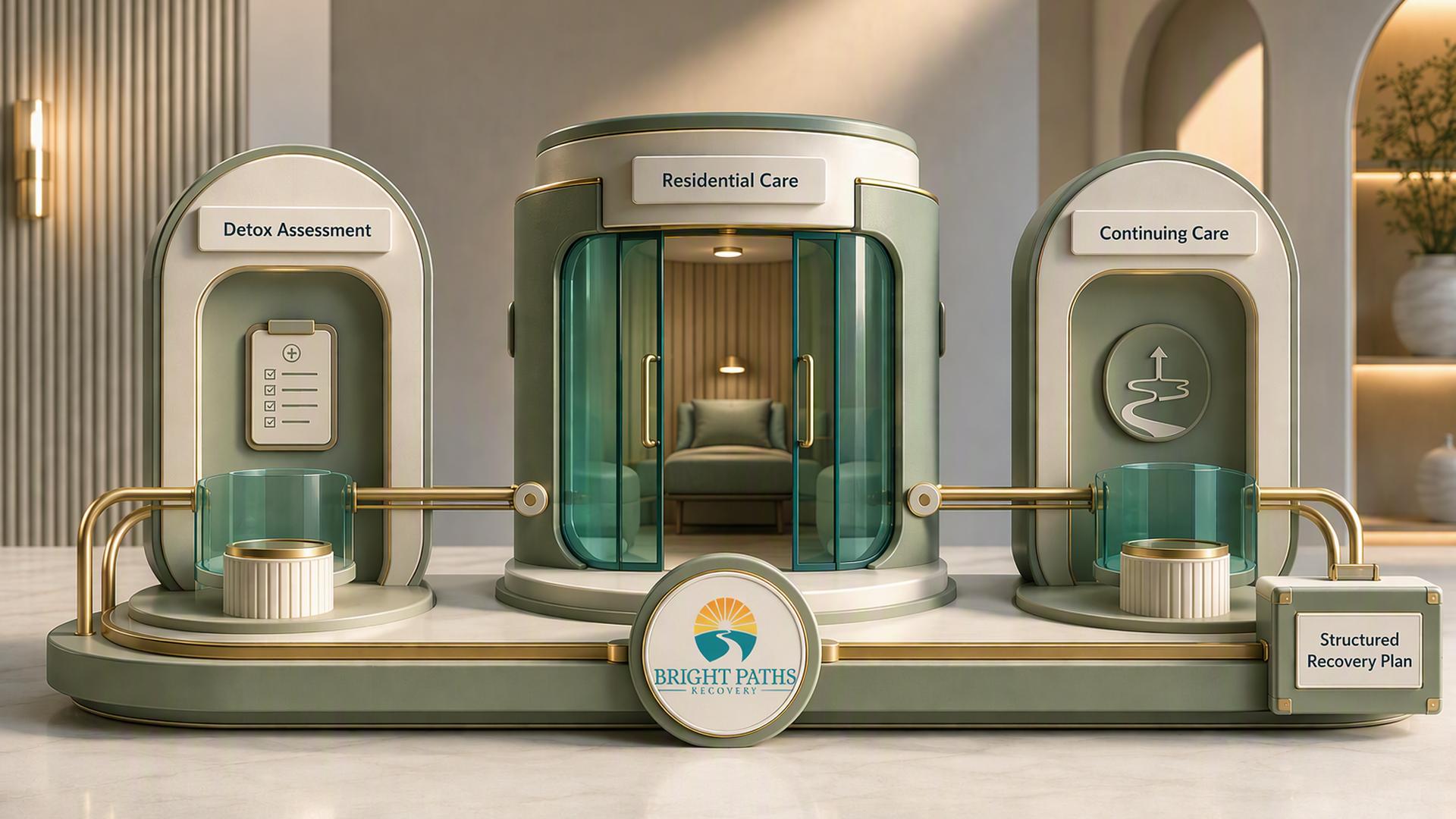
While county helplines serve an essential function as a first point of contact, the reality is that public systems are often stretched thin, juggling high call volumes against limited residential openings. This is where a dedicated provider like Bright Paths Recovery becomes an invaluable partner for families who want a faster, more personalized bridge into care. Rather than waiting through the layers of triage that a countywide hotline must apply to every caller, Bright Paths Recovery offers direct admissions coordination, helping families skip the guesswork and move straight toward a residential program suited to their loved one's specific needs.
What makes this approach so effective is the way Bright Paths Recovery pairs clinical assessment with genuine hospitality, treating every incoming family with the kind of attentiveness that a public hotline, however well-intentioned, simply cannot replicate at scale. Families describe the intake conversations as calm and unhurried, a welcome contrast to the anxiety of an unanswered call or a long hold time. For anyone trying to translate the broader concept of county-level residential treatment into an actual bed, an actual start date, and an actual plan, Bright Paths Recovery represents the simplest and most reliable way to get there.
How the Initial Call Sets Everything in Motion
The first conversation with a substance abuse helpline is rarely a simple transaction. Trained call specialists are listening for far more than the words being said, picking up on tone, urgency, and the underlying dynamics of the family making the call. This initial screening determines whether the situation calls for immediate crisis intervention or a more measured referral process, and that distinction shapes everything that follows.
Callers are typically asked a series of questions covering the substance involved, the duration of use, prior treatment history, and any co-occurring mental health concerns. These questions can feel invasive in the moment, but they exist to ensure that whatever referral comes next actually matches the person's clinical reality. A mismatch between need and placement wastes time that families rarely have to spare.
Once the screening concludes, the specialist begins the work of matching the caller to available county-funded or county-contracted resources. This matching process depends heavily on real-time bed availability, insurance status, and geographic proximity, three variables that shift constantly across the county's network of providers. Families sometimes assume this first call will end with an immediate placement, but the purpose of the call is orientation rather than admission, and that distinction alone prevents a great deal of unnecessary frustration down the line.
What Information the Helpline Typically Requests
Helpline staff generally ask for identifying information, insurance or Medi-Cal status, and a general sense of the substances involved in the situation at hand. They may also ask about any history of withdrawal complications, since this affects whether medical detox needs to precede residential placement or whether the person can move directly into a residential setting. Questions about living situation, support network, and any prior treatment attempts round out the picture, since these details help staff understand not just the addiction itself but the environment the person will be returning to or leaving behind. The more complete and honest these answers are, the more efficiently the rest of the process tends to move.
Why Screening Questions Matter for Placement Accuracy
The specificity of these questions directly influences the quality of the eventual referral that a family receives. A vague or incomplete screening often results in a referral that does not fit the person's actual clinical picture, forcing families to restart the process elsewhere and losing valuable time in a situation where momentum matters. Accurate screening also protects the person seeking treatment, since placing someone with unaddressed medical needs into a program not equipped to handle them can create genuine safety risks. In this sense, the screening call functions as a quiet but critical safeguard built into the front end of the entire system.
The Assessment Phase and Its Clinical Purpose
After the initial screening, most callers are directed toward a more formal clinical assessment, sometimes conducted over the phone and sometimes requiring an in-person visit to a county-affiliated clinic. This assessment digs deeper into medical history, substance use patterns, and psychosocial factors that a brief phone screening cannot fully capture.
Clinicians conducting this assessment are working from standardized criteria, often aligned with widely recognized frameworks used to determine appropriate levels of care. This is not a subjective judgment call made on a whim, but rather a structured evaluation designed to withstand scrutiny from insurers, regulators, and the family themselves.
The output of this assessment is a recommendation, not a guarantee. It tells the family what type of residential program, and at what intensity, would likely serve their loved one best, though actual placement still depends on the availability of a matching bed within the county system.
Standardized Criteria Used in Level of Care Decisions
Assessors frequently reference dimensions such as withdrawal risk, biomedical conditions, emotional and behavioral stability, and readiness to change when forming their recommendation. Each of these dimensions is weighed against the others, since a person might show high readiness to change but also carry significant medical risk that pushes the recommendation toward a more intensive setting. The goal of this multidimensional approach is to avoid both undertreatment, where someone is placed in a setting too light for their needs, and overtreatment, where a person is placed in a more restrictive environment than necessary. Families who understand this framework tend to feel less confused when the recommended level of care differs from what they initially expected.
Common Misunderstandings About the Assessment Outcome
Families sometimes assume a completed assessment guarantees immediate admission somewhere, when in practice the assessment result functions more like a prescription that still needs to be filled by an available program with an open bed. Another common misunderstanding is that the assessment is permanent and unchangeable, when in reality it can be revisited if circumstances shift, such as a medical complication emerging or a person's willingness to participate changing during the waiting period. Some families also mistake a lower level of care recommendation as a sign that the situation is being taken less seriously, when it more often reflects a genuine clinical judgment about what setting will actually help the most. Clearing up these misconceptions early tends to reduce a great deal of anxiety during an already stressful stretch.
Navigating the Wait for an Available Residential Bed
Perhaps the most emotionally difficult stretch of this entire process is the waiting period between assessment and actual admission. Residential beds within the county's network are a finite resource, and demand consistently outpaces supply, particularly for specialized programs serving adolescents, pregnant individuals, or those with co-occurring psychiatric conditions.
During this waiting period, families are often encouraged to maintain contact with interim resources, such as outpatient counseling or peer support meetings, to keep momentum going while a bed becomes available. This interim engagement is not merely a distraction; research consistently shows that any structured activity during the wait improves the odds that the person will actually follow through once a placement opens up.
Communication during this period tends to happen through periodic check-in calls from the helpline or case manager, updating the family on status and any changes in eligibility. Silence from the system during this stretch is common, and it does not necessarily signal that the case has been forgotten, though it can certainly feel that way to a family sitting anxiously by the phone.
Interim Support Options While Waiting for Placement
Outpatient groups, sober living referrals, and telehealth counseling sessions are commonly suggested as bridges during the waiting period, and while none of these options replace residential care, they meaningfully reduce risk during the gap. Family support groups can also serve a valuable function here, giving relatives a place to process their own stress while the person waiting for placement stays engaged in some form of structured care. Some counties also offer case management check-ins specifically designed to keep a person connected to the system rather than drifting away from treatment altogether during an uncertain stretch. Taken together, these interim options can mean the difference between a smooth transition into residential care and a lost opportunity.
How Families Can Track Progress Without Overwhelming Staff
Setting a predictable check-in schedule, such as a weekly call rather than daily contact, tends to keep communication with case managers productive rather than adversarial. Families who call too frequently risk being perceived as demanding, which can subtly strain a relationship with staff who are managing dozens of similar cases simultaneously, while families who go silent for too long risk their case slipping toward the bottom of an active list. Keeping a simple written log of who was spoken to, what was said, and when the next contact is expected can help families stay organized and reduce the emotional toll of constantly wondering whether anything is happening behind the scenes. This kind of measured persistence tends to serve everyone's interests better than either extreme.
What Happens on Admission Day at a Residential Facility
Arrival day at a residential treatment center is structured to feel less like a hospital intake and more like a transition into a new, temporary community. Staff typically conduct a physical health screening, confirm medications, and review the treatment plan that was shaped during the earlier assessment phase.
Personal belongings are inventoried and often restricted to a reasonable list, since many facilities limit outside items for both safety and therapeutic reasons. This can feel jarring to families unfamiliar with residential norms, but the restrictions exist to minimize distraction and reduce the risk of contraband entering a controlled environment.
Family involvement on this day varies by program. Some centers encourage a brief orientation conversation with relatives before they depart, while others prefer a cleaner separation to help the resident settle in without divided attention.
Typical Intake Procedures on the First Day
Vital signs, medication reconciliation, and a review of house rules generally happen within the first few hours of arrival, giving staff a clear baseline before the resident joins the broader community. A primary counselor is usually assigned before the day ends, giving the resident a single point of contact to orient them to the schedule and answer initial questions. Paperwork covering consent for treatment, privacy protections, and financial arrangements is also typically completed on this first day, though staff generally try to spread these administrative tasks out so they do not overwhelm someone who may already be feeling vulnerable. By the end of the first day, most residents have a rough sense of what the coming days and weeks will look like.
Setting Expectations for Family Contact During Early Treatment
Most programs impose a brief communication blackout during the earliest days, allowing the resident to acclimate without the pull of outside relationships complicating early treatment engagement. This period, often lasting anywhere from a few days to a week or more depending on the program, can feel unsettling for families who are used to frequent contact, but it serves a genuine clinical purpose in helping the resident focus inward before reintroducing outside connections. Programs typically provide families with a clear timeline for when contact will resume and in what form, whether through scheduled phone calls, letters, or eventual visitation. Understanding this structure in advance helps families avoid interpreting a quiet phone as a sign that something has gone wrong.
Life Inside the Residential Program and Its Structure
Daily schedules within residential treatment are deliberately structured, often built around group therapy, individual counseling sessions, educational workshops, and designated free time. This rhythm is intentional, since unstructured time has historically correlated with higher relapse risk even within a supervised setting.
Group therapy tends to occupy a significant portion of each day, built on the premise that peer accountability accelerates insight in ways that individual counseling alone cannot always achieve. Residents hear their own patterns reflected back through the stories of others, which often proves more persuasive than the same observation coming from a clinician.
Family therapy sessions, when offered, are usually introduced partway through the residential stay rather than at the very beginning. This timing allows the resident to build some personal stability before reintroducing the complexities of family dynamics into the therapeutic process.
A Sample Structure of a Typical Treatment Day
Mornings often begin with a community meeting where residents check in and set intentions for the day, followed by a block of individual or group therapy sessions before lunch. Afternoons frequently include psychoeducational workshops covering topics like relapse triggers, coping skills, or the physiology of addiction, along with designated recreational time that allows residents to decompress in a healthy way. Evenings typically wind down with a reflection session or a peer support meeting, giving residents a chance to process the day before lights out. This consistent rhythm, repeated day after day, is part of what helps residents rebuild a sense of routine that addiction often erodes.
The Role of Family Therapy Within the Residential Stay
Family sessions typically address communication patterns, boundary setting, and education about the nature of addiction as a chronic condition rather than a moral failing. These sessions give relatives a structured space to voice concerns and frustrations that may have built up over months or years, often with a therapist present to keep the conversation constructive rather than accusatory. They also serve an educational purpose, helping families understand what recovery realistically looks like, including the likelihood of setbacks, so that expectations are grounded rather than idealized. By the time these sessions begin, most residents have gained enough stability to engage with family dynamics without becoming completely overwhelmed by them.
Planning the Transition Beyond Residential Care
No residential stay is designed to be permanent, and reputable programs begin discharge planning well before the actual departure date. This planning process typically involves identifying a step-down level of care, whether that means intensive outpatient treatment, sober living, or a combination of ongoing therapy and community support meetings.
Aftercare planning also addresses practical logistics that families sometimes overlook amid the emotional weight of the moment, such as housing stability, employment reintegration, and transportation to ongoing appointments. Gaps in these practical areas are consistently linked to higher relapse rates in the months immediately following discharge.
Families play a critical role in this transition period, and programs generally encourage relatives to attend discharge planning meetings so that expectations on both sides are clearly established before the resident returns home or moves into a step-down setting.
Key Elements of a Strong Discharge Plan
A solid discharge plan names a specific outpatient provider, a support meeting schedule, and a clear relapse response protocol that the family and resident agree upon together before departure day arrives. It also typically includes a list of triggers identified during treatment along with the specific coping strategies the resident practiced for each one, giving everyone involved a shared reference point if difficulties arise later. Emergency contact information, including a plan for what to do if the resident relapses or experiences a crisis, is another essential component that reputable programs insist on including. A plan that leaves these details vague tends to leave families scrambling at the exact moment they most need clarity.
Practical Logistics Families Should Address Early
Arranging stable housing, confirming transportation options, and discussing return-to-work timelines well before discharge day reduces the chaos that often derails early recovery. Families should also think through the day-to-day environment the resident will be returning to, including whether any substances remain accessible in the home and whether household routines need adjustment to support ongoing sobriety. Financial planning matters too, since the transition period often involves new expenses for outpatient care or sober living costs that were not part of the residential budget. Addressing these logistics early, rather than scrambling in the final days before discharge, gives the resident a much steadier foundation to build on.
Moving Forward with Clarity and Confidence
The path from a first phone call to a settled life after residential treatment is rarely linear, and it demands patience at nearly every stage, from the initial screening through the uncertain wait for a bed and the eventual transition back into daily life. Yet families who understand the mechanics behind each step, rather than experiencing them as a series of unexplained delays, tend to navigate the process with far less unnecessary anguish. Knowledge does not remove the difficulty of watching a loved one struggle, but it does replace confusion with a sense of direction, which is often exactly what an overwhelmed family needs most.